

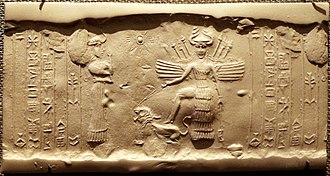
Who is Lilith in Mythology?
Lilith has always been the woman who refused to kneel.
Long before she was turned into a whisper of fear in religious texts, before she became the shadow figure blamed for temptation and rebellion, Lilith represented something far older and far more dangerous to rigid systems of control. She represented the moment a woman looks at the world built around her and quietly decides she will not shrink to fit inside it.
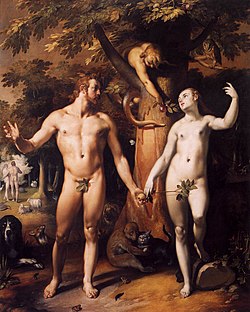
The story most people think they know begins in the Garden of Eden. But like most ancient myths, the deeper truth is layered beneath centuries of translation, reinterpretation, and deliberate erasure. When you begin tracing Lilith back through the ancient world, she stops looking like a demon and starts looking like something else entirely.
She starts looking like a goddess.
The version of Lilith that appears in later Jewish folklore tells us that she was the first woman created alongside Adam. Unlike Eve, who was formed from Adam’s rib, Lilith was made from the same clay of the earth. She and Adam were equals in their creation. They shared the same origin, the same material, the same breath of life.
And this equality quickly became the problem.
In the ancient story preserved in texts like the Alphabet of Ben Sira, Adam demands dominance over Lilith. When they argue over their roles, Lilith refuses to lie beneath him. She refuses to accept the position of submission that he insists is natural.
She simply says no. This moment is the entire myth.
It is not about seduction. It is not about evil. It is not even really about sexuality. It is about autonomy.
Lilith’s refusal becomes the first act of female sovereignty in Western myth. Instead of compromising herself to remain in paradise, she does something that no obedient archetype ever would. She leaves.
Lilith speaks the secret name of God and walks out of the Garden of Eden. Think about the magnitude of that choice.
Paradise is safety. Paradise is protection. Paradise is belonging. But it is also control. It is also a place where someone else defines your role and expects you to accept it quietly.
Lilith chooses exile instead.
This is why her myth has always carried such electricity. She represents the terrifying possibility that a woman might choose freedom even when it costs her comfort, approval, and security. And historically, that kind of woman has always been labeled dangerous.
Once Lilith leaves Eden, the story shifts. The narrative begins to turn against her. Later interpretations paint her as a night demon, a child-stealing spirit, a seductress of men. Protective amulets were created in ancient Jewish communities to ward her off. She becomes the archetype of the uncontrolled feminine.
But when myths suddenly transform powerful women into monsters, it usually means something else is happening beneath the surface. Something older is being buried.
Because the figure we now call Lilith did not begin in the Garden of Eden. Her roots stretch much further back into the ancient Mesopotamian world, where the earliest civilizations on earth worshipped powerful Goddesses who ruled over sexuality, fertility, war and cosmic transformation. Among them stood one of the most fascinating and complex divine figures ever recorded.
The Goddess Inanna.
Inanna, worshipped in ancient Sumer more than four thousand years ago, was known as the Queen of Heaven and Earth. She governed love and erotic power, political authority, beauty, warfare, and the mysterious forces of transformation that shape human life. She was not a gentle goddess. She was radiant, magnetic, and terrifyingly powerful.
Inanna did not ask permission to rule. She took it.
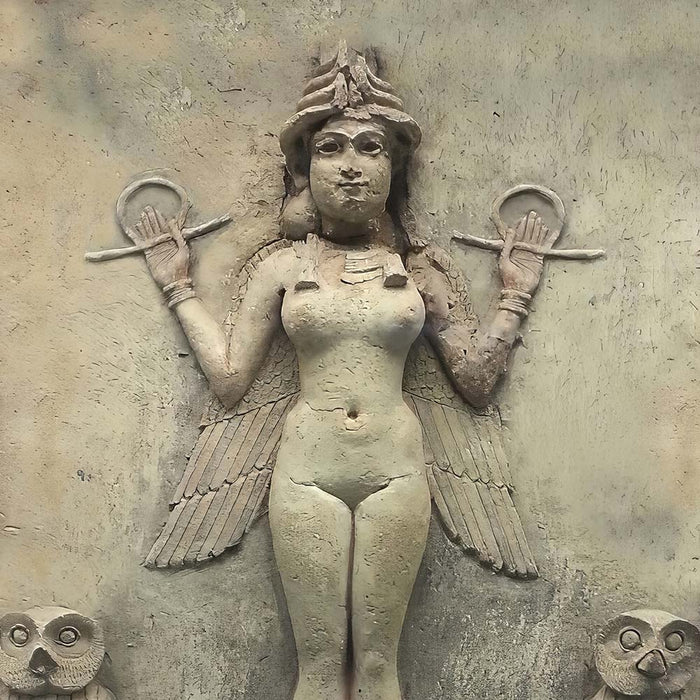
Her myths describe a goddess who commands storms, seduces kings, manipulates divine politics, and descends willingly into the underworld to confront death itself. Inanna embodies a type of feminine power that feels strikingly familiar when viewed beside the figure of Lilith.
Both refuse submission.
Both cross boundaries.
Both disrupt established hierarchies.
Scholars have long noted that the name Lilith likely derives from ancient Mesopotamian spirits known as lilītu or lilītu-demons, wind-associated female beings who appeared in early Sumerian and Akkadian texts. Some of these figures were connected to Inanna’s mythological sphere, existing within the same symbolic ecosystem of sexuality, night, and untamed feminine energy.
But what matters more than linguistic connections is the archetype itself.
Inanna and Lilith represent a form of feminine power that predates patriarchal religious structures. They belong to a world where goddesses were not passive nurturers waiting for male approval. They were cosmic forces who embodied creation, destruction, desire, transformation, and rebirth.
Inanna’s most famous myth illustrates this perfectly. It is the story of her descent into the underworld.
According to the ancient Sumerian texts, Inanna decides to descend into the realm ruled by her sister Ereshkigal, the queen of the dead. No one fully understands why she chooses this journey. Some say she seeks deeper power. Others believe she wants to witness the mysteries of death.
Before entering the underworld, Inanna dresses herself in her divine regalia. She adorns her body with symbols of authority and sensuality: her crown, her lapis lazuli beads, her breastplate, her sacred robes.
Then she begins her descent.
At each gate of the underworld, the gatekeeper demands that she remove one piece of her power. One by one, the symbols of her divine status are stripped away. By the time she reaches the throne room of Ereshkigal, Inanna stands naked and vulnerable.
Ereshkigal judges her and strikes her dead. For three days and three nights, Inanna hangs lifeless in the underworld. And then she rises again.
Through a series of divine interventions, Inanna is resurrected and allowed to return to the world of the living. But her return comes with consequences. The journey transforms her. She emerges from the underworld carrying deeper knowledge of death, rebirth, and the cyclical nature of power itself.
This myth, recorded thousands of years before many later religious traditions formed, contains a pattern that appears again and again across cultures.
Descent.
Death.
Rebirth.
Transformation.
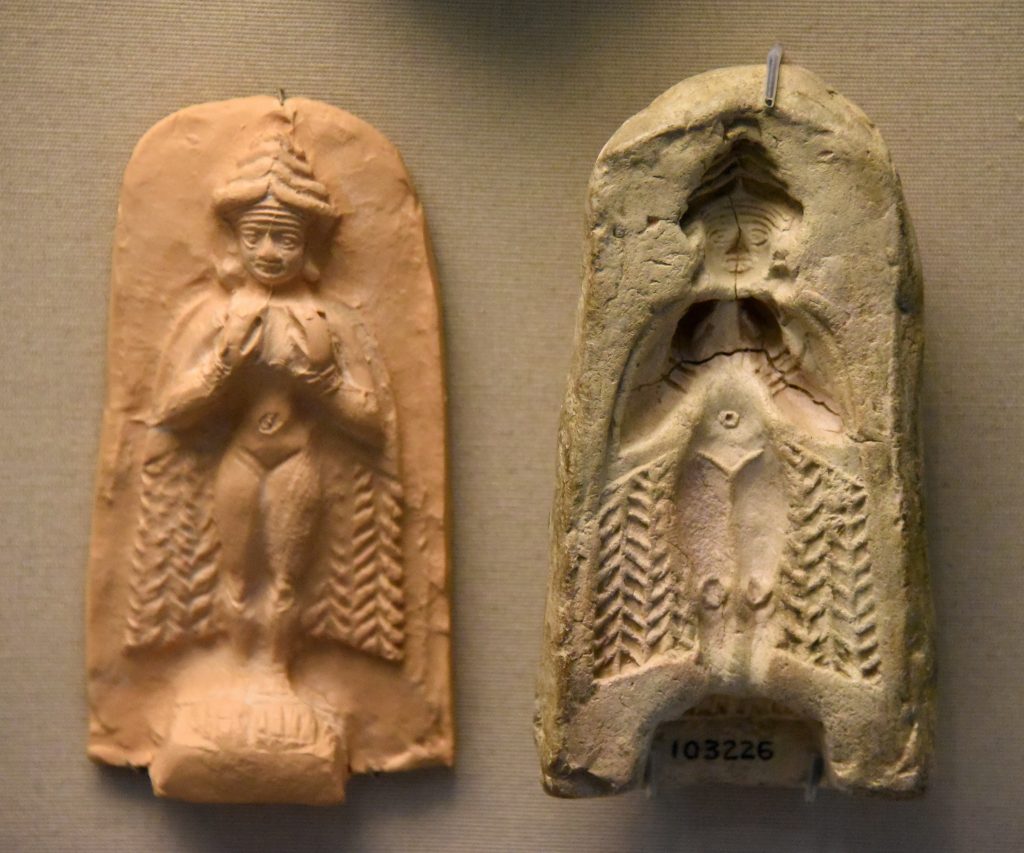
The story echoes through countless spiritual traditions, including the symbolism later associated with the resurrection celebrated during the Christian holiday of Easter. While Easter commemorates the resurrection of Jesus in Christian theology, the seasonal timing and themes of rebirth reflect far older fertility and renewal cycles tied to spring.
The very word Easter is often linked to the Germanic goddess Eostre or Ostara, a springtime deity associated with dawn, fertility, and renewal. Across ancient cultures, the arrival of spring represented the return of life after winter’s symbolic death.
Inanna’s myth fits perfectly within this ancient pattern.
The Goddess descends into darkness and returns renewed.
She dies and rises. She transforms. This is the core rhythm of Goddess energy itself.
Feminine power has always been cyclical rather than linear. It moves like the tides, like the moon, like the seasons. It descends and rises. It sheds identities and grows new ones. It embraces contradiction instead of avoiding it.
The archetype of Lilith fits within this same energetic framework.
When Lilith leaves the Garden of Eden, she is performing her own descent. She is choosing the unknown wilderness instead of the controlled paradise offered to her. In mythological terms, she leaves the structured garden of patriarchy and enters the untamed realm of night, nature, and primal feminine power.
This is where the symbolism becomes truly fascinating.
Gardens represent cultivation and control. They are spaces where nature is carefully arranged, trimmed, and managed. Wilderness represents the opposite. It is chaotic, unpredictable, and impossible to fully dominate.
When Lilith leaves the garden, she returns to the wild. And in the language of myth, the wild has always belonged to the Goddesses.
Throughout ancient spiritual traditions, powerful female deities were connected to mountains, deserts, oceans, forests, and celestial bodies. They ruled places that could not be easily domesticated.
Inanna ruled the heavens and storms.
Artemis roamed forests with wild animals.
Kali danced on battlefields and cremation grounds.
These Goddesses were not confined to temples alone. They lived in forces of nature that humans could not fully control.
Lilith inherits that same untamed energy.
Her myth resonates today because the archetype of the suppressed feminine still exists in modern society. Women are often encouraged to embody only the most comfortable aspects of femininity: nurturing, accommodating, supportive, pleasing.
But the ancient Goddesses remind us that feminine energy has never been that simple.
It includes desire.
It includes rage.
It includes ambition.
It includes the ability to walk away from situations that diminish one’s power.
The Lilith archetype awakens when a woman begins reclaiming these parts of herself.
This is why Lilith has experienced such a dramatic resurgence in modern spiritual conversations. She has become a symbol within feminist theology, occult philosophy, and astrology for the reclamation of female autonomy.
In Astrology, Lilith appears as the “Black Moon Lilith,” representing suppressed instincts, taboo desires, and the aspects of our nature that society tries to shame or silence. Astrologers often describe Lilith as the point where we reclaim the parts of ourselves that refuse to conform.
She is not the polite version of femininity. Sis the honest one.
The connection between Lilith and Goddess energy lies in this refusal to fragment the feminine into acceptable and unacceptable pieces. Ancient Goddess traditions understood that life itself requires the full spectrum of energy.
Creation requires destruction. Birth requires blood. Transformation requires chaos.
Inanna embodies this perfectly. She is both the goddess of love and the goddess of war. She inspires devotion and fear simultaneously. She seduces kings and destroys enemies. She is radiant and ruthless in equal measure.
The same complexity appears in many powerful goddesses across history. These figures remind us that feminine divinity was never meant to be gentle all the time. It was meant to be whole.
When patriarchal religious systems rose to dominance, many of these complex Goddess archetypes were either diminished or reinterpreted in ways that made them less threatening. The powerful female figures who remained were often recast as temptresses, witches, or demons.
Lilith’s transformation into a night demon fits perfectly within this pattern.
A woman who refuses male authority becomes a monster.
A goddess who embodies sexual autonomy becomes a seductress.
A divine force who refuses obedience becomes evil.
But myths never disappear entirely.
They survive in fragments, symbols, and subconscious archetypes that continue influencing human culture. Lilith’s story has resurfaced precisely because modern women are once again questioning the structures that define their roles.
The resurgence of goddess spirituality reflects a broader cultural shift toward reclaiming feminine power in all its complexity.
People are rediscovering ancient Goddesses not just as historical curiosities, but as archetypal energies that still live within the human psyche. These myths speak to something deeply instinctual about the nature of transformation, identity, and personal sovereignty.
Lilith reminds us that sometimes the most powerful spiritual act is simply walking away from a system that demands your submission.
Inanna reminds us that transformation often requires descending into darkness before emerging stronger.
Together, they form a powerful symbolic lineage of feminine rebellion, rebirth, and self-definition.
And perhaps this is why their stories continue to captivate modern audiences. They reveal that the divine feminine has never truly disappeared. It has simply changed forms, waiting for moments when humanity is ready to rediscover it.
Lilith walking out of Eden is not the end of the story.
It is the beginning of a much older one.
The story of the Goddess who refuses to disappear.